A mean 4-year evaluation of infection control rates of hip and knee prosthetic joint infection-related revision arthroplasty: an observational study
Bruce VAN DIJK 1, F Ruben H A NURMOHAMED 1, J Fred F HOONING VAN DUYVENBODE 1, Ewout S VELTMAN 1, Rob J RENTENAAR 2, Harrie WEINANS 1,3, H Charles VOGELY 1, and Bart C H VAN DER WAL 1
1 Department of Orthopedics, University Medical Center Utrecht, Utrecht; 2 Department of Medical Microbiology, University Medical Center Utrecht, Utrecht; 3 Department of Biomechanical Engineering, TU Delft, Delft, The Netherlands
Background and purpose — The long-term results of the 1- or 2-stage revision procedure and infection-free prosthesis survival in a tertiary referral center are unknown. In this retrospective observational study, the long-term results of infection control and infection-free prosthesis survival of the periprosthetic joint infection-related 1- and 2-stage revision procedure are evaluated. Furthermore, the merits of performing an antibiotic-free window in the 2-stage revision is evaluated.
Patients and methods — All patients who received a 1- or 2-stage revision procedure of the hip or knee between 2010 and 2017 were included. Data was collected on patient and infection characteristics. The primary treatment aim was successful infection control without the use of antibiotic therapy afterwards. Infection-free survival analysis was performed using the Kaplan–Meier method with type of periprosthetic joint infection-related revision as covariate. Within the group of 2-stage revisions, use of an antibioticfree window was selected as covariate.
Results — 128 patients were treated for a periprosthetic joint infection-related revision procedure (81 hips and 47 knees). Successful infection control was achieved in 18 of 21 cases for the 1-stage and 89 out of 107 cases for the 2-stage revision procedure (83%) respectively after follow-up of more than 4 years. In addition, 2-stage revision procedure infection control was achieved in 52 of 60 cases with an antibiotic-free interval and 37 of 45 cases without such interval (p = 0.6). The mean infection-free survival of the 1-stage revision was 90 months (95% CI 75–105) and 98 months (CI 90–106) for the 2-stage revision procedure.
Interpretation — There seems to be no difference in infection control and infection-free survival between the 1- and 2-stage revision procedure. Second, an antibiotic-free window in the case of a 2-stage revision did not seem to influence treatment outcome. However, one must be cautious when interpreting these results due to confounding by indication and the small study population. Therefore, no definite conclusion can be drawn.
Citation: Acta Orthopaedica 2022; 93: 652–657. DOI http://dx.doi.org/10.2340/17453674.2022.3975.
Copyright: © 2022 The Author(s). This is an Open Access article distributed under the terms of the Creative Commons Attribution-NonCommercial 4.0 International License (https://creativecommons.org/licenses/by-nc/4.0/), allowing third parties to copy and redistribute the material in any medium or format and to remix, transform, and build upon the material for non-commercial purposes, provided proper attribution to the original work.
Submitted: 2021-10-29. Accepted: 2022-06-08. Published: 2022-07-13.
Correspondence: b.vandijk-6@umcutrecht.nl
All authors were involved in designing or conceiving the research. BD and FN contributed in data collection and analyzed the data. BD, RN, FHVD, and EV wrote the manuscript. HCV and BW performed surgery and provided data. BW supervised the project.
Acta thanks Alex Soriano and Ricardo Sousa for help with peer review of this study.
The incidence of periprosthetic joint infection after primary arthroplasty ranges from 1% to 2% (1). The outcome of PJI treatment is often not dichotomous but, rather, a gradient of outcomes that can be divided into 4 tiers (2). Tier 1 is considered to be the most successful and describes infection control with no antibiotic therapy. Tier 2 includes infection control with the patient being on suppressive antibiotic therapy. Tier 3 is where revision surgery or amputation is required after PJI treatment. Finally, tier 4 involves fatality. Surgical treatment options for chronic PJI revision arthroplasty include a 1- or 2-stage revision procedure. 2-stage revision is the most frequently used treatment. However, the 1-stage revision procedure has increasingly been advocated because of outcomes comparable with the 2-stage revision (3,4). In a 2-stage revision procedure, there is no consensus on the proper length of antibiotic therapy and whether an antibiotic-free window may benefit treatment outcome (5,6).
We evaluated the long-term results of PJI-related 1-stage and 2-stage revision procedures. The secondary aim is to evaluate whether the use of an antibiotic-free period in a 2-stage revision affects treatment outcome.
Patients and methods
In this retrospective cohort study, all patients treated with revision surgery of the hip or knee between January 2010 and January 2017 were included. Patients who fulfilled the MSIS criteria 2014 were considered to have a septic infection (7). This entails obtaining 2 positive cultures of the same microorganism or determining the existence of a communicating sinus tract. Elevated ESR, CRP, synovial leucocyte count, synovial neutrophils percentage, and a single positive culture result were seen as minor criteria. Cases that did not comply with the aforementioned criteria were marked as MSIS-negative infections. The follow-up period was calculated as the time interval between the date of the definitive revision procedure till failure of treatment, death, or May 2020.
As suggested by the Musculoskeletal Infection Society workgroup, the primary treatment aim after revision for PJI was tier 1 infection control based on the outcome-reporting tool (2). In this regard, no use of antibiotic therapy was considered as a successful outcome. Reasons to stop antibiotic therapy were, e.g., the absence of clinical signs such as pain, swelling, and erythema and radiological signs such as loosening or laboratory signs such as CRP (> 10 mg/L). Tier 2 or higher infection control based on the aforementioned outcome-reporting tool was considered as a failure of treatment.
Patient characteristics
Medical charts were examined for characteristics such as age, sex, BMI, ASA class, smoking or alcohol use, comorbidities, and soft tissue involvement. Data on previous orthopedic treatments in the referring hospitals was retrieved from the referral letters.
Prosthesis and periprosthetic joint infection characteristics
PJI characteristics include type of joint, type of revision procedure, type of infection (septic infection or MSIS-negative infection), and soft tissue involvement.
The joint age is defined as the time interval between primary arthroplasty and PJI-related revision procedure. The infectionfree survival of the prosthesis was defined as the time between reimplantation of the prosthesis until the end of the follow-up period, without recurrence of infection.
Type of infection, grading of host, and local infection site were evaluated according to Cierny, McPherson and Zimmerli classification systems (8-10).
Microbiology characteristics
Microbiology characteristics include tissue cultures for microbiological diagnostics. Special emphasize was made for difficult-to-treat microorganisms (1,11,12). The length of antibiotic treatment within the interval of stages for a 2-stage revision and length of postoperative antibiotic treatment were calculated. Preoperative antibiotics were defined as therapeutic antibiotics continued during perioperative sampling.
Surgical treatment and procedure
A 1-stage revision consists of removing the infected prosthesis, and meticulous debridement and irrigation of the joint space, followed by reimplantation of a hip or knee prosthesis during the same procedure. A 2-stage revision consists of 2 separate surgical interventions. During the first procedure, the infected prosthetic joint is removed along with all the material suspected to be infected, the joint is extensively debrided and irrigated, and an antibiotic-loaded spacer is implanted. The last stage of the 2-stage procedure is performed after 6–8 weeks. During this period, 45 patients were treated with antibiotics until reimplantation, in contrast to 60 patients who had an antibiotic-free period in the last 2 weeks of this interval. During the last stage of the 2-stage procedure the spacer is removed, the surgical site is again debrided and irrigated, and a hip or knee prosthesis is then reimplanted. A change of antibiotic protocol was practiced because the main consensus concerning the effectiveness of the antibiotic-free period was deemed to be questionable.
For both types of revision procedures, at least 5 intraoperative tissue, fluid, and sonication fluid samples were taken for microbiological diagnostics. Vancomycin or cefazolinwas given as broad-spectrum antibiotic prophylaxis until the pathogen was identified and targeted antibiotic therapy could be started. The postoperative antibiotic treatment was determined in consultation with the microbiologist and adjusted, based on the perioperative culture results. The duration of antibiotic treatment after a second-stage procedure was dependent on the outcome of the culture results. When the culture results were negative after reimplantation, an additional 6 weeks of antibiotic treatment was prescribed. When culture returned a positive result, antibiotic treatment was prolonged until 3 months after reimplantation. The length of antibiotic treatment after a 1-stage revision was 3 months regardless of culture results. In addition, PJIs with fungal pathogens were treated with antimycotic therapy for a duration of 1 year or lifelong according to hospital protocol.
The indication for the 1-stage or 2-stage revision procedure was set according to the consensus statement as per the Proceedings of the International Consensus on Periprosthetic Joint Infection (13).
Statistics
Descriptive statistics, mean, and range are used to represent the demographics of the patient’s procedure. Survival of prostheses was calculated using the Kaplan–Meier method. Data management and analysis was performed using the Statistical Package for the Social Sciences (Released 2017. IBM SPSS Statistics for Windows, Version 25.0. IBM Corp, Armonk, NY, USA).
Ethics, data sharing, funding, and potential conflicts of interest
This retrospective study was conducted at the University Medical Centre Utrecht and complies with institutional guidelines. Individual patients cannot be identified, and therefore Ethical Committee approval is not mandatory. The data used and presented in this study is available in the SPSS information file and is available on request from the corresponding author. This research received no specific grant from any funding agency in the public, commercial, or non-profit sectors. The authors declare that they have no conflict of interest.
Results
128 PJI-related revision arthroplasty procedures were performed between 2010 and 2017. 3 of these patients died from non-PJI-related causes after the first step of the 2-stage revision procedure and were excluded from the analyses. 1 patient refused further treatment after the first step of the 2-stage revision procedure and was therefore excluded from all analyses (Figure 1). The mean follow-up period was 53 months (8 days–115 months). Patient, prosthesis, and periprosthetic joint infection characteristics are given in Table 1. The overall infection control rate for 1-stage and 2-stage revision procedures was 84% (107 of 128 cases).
| Factor | Total (n = 128) | Revision procedure | |
| 2-stage (n = 107) | 1-stage (n = 21) | ||
| Patient characteristics | |||
| Infection control | 107 (84) | 89 (83) | 18 (86) |
| Age (range) | 71 (44–92) | 70 (44–92) | 72 (55–92) |
| Female sex | 74 (58) | 62 (58) | 12 (57) |
| Mean BMI (range) | 28 (18–38) | 28 (19–38) | 26 (18–38) |
| ASA-1 | 15 (12) | 13 (12) | 2 (10) |
| ASA-2 | 84 (66) | 72 (67) | 12 (57) |
| ASA-3 | 28 (22) | 22 (21) | 6 (29) |
| ASA-4 | 1 (1) | 0 (0) | 1 (5) |
| Risk factors | |||
| Smoking | 14 (11) | 11 (10) | 3 (14) |
| Alcohol abuse | 15 (12) | 11 (10) | 4 (19) |
| Host-score according to McPherson | |||
| Uncompromised | 54 (42) | 47 (44) | 7 (33) |
| Compromised | 69 (54) | 56 (52) | 13 (62) |
| Significantly compromised | 5 (4) | 4 (4) | 1 (5) |
| Host-score according to Cierny | |||
| Uncompromised | 30 (23) | 26 (24) | 4 (19) |
| Local | 4 (3) | 4 (4) | 0 (0) |
| Systemic | 85 (66) | 70 (65) | 15 (71) |
| Local and systemic | 9 (7) | 7 (7) | 2 (10) |
| Prosthesis and periprosthetic joint infection characteristics | |||
| Total hip revisions | 81 (63) | 67 (63) | 14 (67) |
| Total knee revisions | 47 (37) | 40 (37) | 7 (33) |
| Indication for revision | |||
| Septic infection | 107 (84) | 91 (85) | 16 (76) |
| 2 positive cultures of the same organism | 81 (63) | 70 (65) | 11 (52) |
| A sinus tract communicating with the joint | 13 (10) | 12 (11) | 1 (5) |
| Complied with at least a score of 6 of the minor criteria | 13 (10) | 9 (8) | 4 (19) |
| MSIS-negative infection | 21 (16) | 16 (15) | 5 (24) |
| Infection period | |||
| Mean joint age (months) | 45 (0–341) | 39 (0–283) | 80 (1–341) |
| Soft tissue involvement | |||
| Abscess or fistula | 22 (17) | 18 (17) | 4 (19) |
| Infection score (McPherson) | |||
| Early (< 4 weeks) | 0 (0) | 0 (0) | 0 (0) |
| Late postoperative a | 128 (100) | 107 (100) | 21 (100) |
| Local score (McPherson) | |||
| Uncompromised | 5 (0) | 5 (5) | 0 (0) |
| Compromised | 122 (94) | 101 (94) | 21 (100) |
| Significantly compromised | 1 (1) | 1 (1) | 0 (0) |
| Infection type (Zimmerli) | |||
| Early | 11 (9) | 10 (9) | 1 (5) |
| Delayed | 58 (45) | 51 (48) | 7 (33) |
| Late | 59 (48) | 46 (43) | 13 (62) |
| Systemic antibiotics | |||
| Preoperative | 30 (23) | 24 (22) | 6 (29) |
| a > 4 weeks | |||
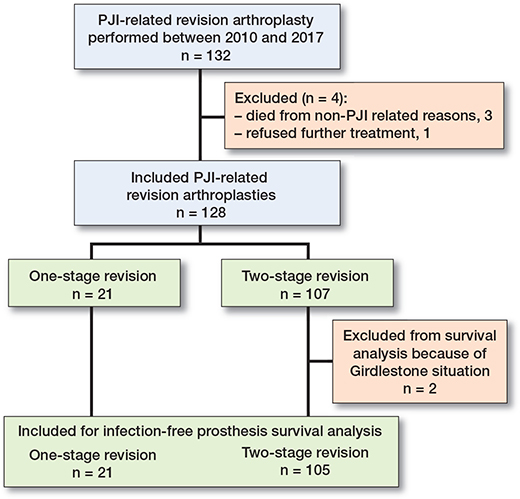
Figure 1. Flowchart of all included patients and patients included in the survival analysis of the PJI-related arthroplasty.
Revision procedure
The infection control rate of the 1-stage revision procedure was 18 of 21 cases: 12 of 14 hip cases and 6 of 7 knee cases. The infection control rate of the 2-stage revision procedure was 89 of 107 cases (83%): 56 of 67 hips and 33 of 40 knees.
Infection-free survival analysis (Figures 1 and 2)
In 2 patients a Girdlestone procedure was done and was considered as a failed treatment for the infection control analysis but excluded from the prosthesis survival analysis because no implant could be placed. 126 of 128 patients were included for the infection-free prostheses survival analysis. The mean follow-up time of the 1-stage and 2-stage revision was 50 months (8 days to 104 months) and 52 months (9 days to 115 months) respectively. The cumulative infection-free survival of implanted prostheses was calculated at 0, 24, 48, 72, and 96 months. For the 1-stage revision this was 90%, 84%, 84%, 84%, and 84%, respectively, and for the 2-stage revision, 87%, 85%, 81%, 77%, and 77%, respectively.
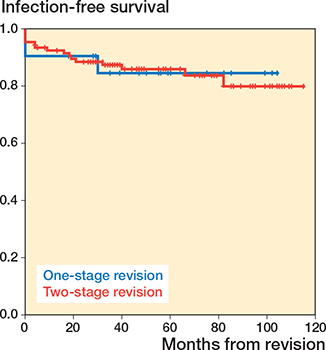
Figure 3. Survival analyses of PJI-related revision arthroplasty using the Kaplan–Meier method.
The mean infection free survival of the implant was 90 months (95% CI 75–105) after a 1-stage revision procedure and 98 months (CI 90–106) after a 2-stage revision procedure.
Antibiotic-free period for 2-stage PJI-related revision arthroplasty procedures
An antibiotic-free period was used with 2-stage revision in 60 cases, where antibiotics were continued until reimplantation in 45 cases. The infection control rates of the 2-stage revision procedure, with and without an antibiotic-free period, were 52 out of 60 cases and 37 out of 45 cases respectively. The infection control rates were 31 of 37 hips and 21 of 23 knees for patients with an antibiotic-free period and 25 of 28 hips and 12 of 17 knees for patients without an antibiotic-free period. We did not find a statistically significant difference in infection control rate between a 2-stage PJI-related revision arthroplasty with or without an antibiotic-free holiday (p = 0.6).
Microbiological culture results (Tables 2 and 3)A positive perioperative culture was found in 98 cases. Polymicrobial infections were found in 31 cases. Staphylococcus aureus was found in 14 cases that were all treated with a 2-stage revision procedure. Difficult-to-treat microorganisms were found in both the 1-stage and 2-stage revision procedure. Rifampicin-resistant staphylococci were found in 3 cases treated with a 1-stage revision procedure and in 6 cases treated with a 2-stage revision procedure. Ciprofloxacin-resistant gram-negative bacteria were found in 2 cases treated with a 2-stage revision procedure. Fungi were found in 1 case treated with a 1-stage revision procedure versus 2 cases treated with the 2-stage revision procedure. No vancomycinresistant enterococci, quinolone-resistant gram-negative, or enterococci were found in our study population. The infection control of the difficult-to-treat microorganisms can be found in Table 3. Negative perioperative cultures were found in 30 cases. Of these, 3 cases had a positive culture of preoperatively obtained joint aspirate. In 4 of 21 cases of the 1-stage revision procedure and in 8 of 107 cases of the 2-stage revision procedure positive cultures of a preoperatively obtained joint aspirate were found. No statistically significant difference was found in the incidence of preoperative obtained bacteria between the 1-stage revision procedure and the 2-stage revision procedure (p = 0.1).
| Factor | Infection control | Total | |
| Successful | Failed | ||
| Polymicrobial | 27 | 4 | 31 |
| Staphylococcus epidermidis | 20 | 1 | 21 |
| Staphylococcus aureus | 9 | 5 | 14 |
| Staphylococcus capitis | 2 | 1 | 3 |
| Enterococcus faecalis | 2 | 1 | 3 |
| Enterobacter cloacae | 2 | 1 | 3 |
| Streptococcus dysgalactiae | 2 | 1 | 3 |
| Cutibacterium acnes | 2 | 1 | 3 |
| Staphylococcus lugdunensis | 1 | 1 | 2 |
| Corynebacterium striatum | 1 | 1 | 2 |
| Candida albicans | 0 | 1 | 1 |
| None | 29 | 1 | 30 |
| Other a | 10 | 2 | 12 |
| Total | 107 | 21 | 128 |
| a Coagulase-negative staphylococcus, Enterococcus faecium, Escherichia coli, Haemophilus parainfluenzae, Bacillus cereus complex, Streptococcus anginosus group, Aggregatibacter species, Streptococcus mutans, Candida species, Granulicatella adiacens, and Salmonella species. | |||
A total of 30 patients received preoperative antibiotics, of which 11 cases resulted in negative perioperative cultures. For cases with no preoperative antibiotics, 19 of 98 cases resulted in negative perioperative cultures (p = 0.08).
The infection control rates of the 1-stage revision procedure, with and without the use of preoperative antibiotics, were 6 of 6 cases and 12 of 15 cases, respectively. We found no statistically significant difference in infection control rate between a 1-stage PJI-related revision arthroplasty with or without use of preoperative antibiotics (p = 0.5). The infection control rates of the 2-stage revision procedure, with or without use of preoperative antibiotics, were 22 oof 24 cases and 67 of 83 cases, respectively. We found no statistically significant difference in infection control rate between a 2-stage PJI-related revision arthroplasty with or without use of preoperative antibiotics (p = 0.4).
Furthermore, for the 2-stage revision procedures with an available last-stage culture (n = 105) an antibiotic-free period showed positive cultures at the last stage in 7 of 60 cases. 2-stage revision procedures with no antibiotic-free period showed positive cultures in 5 of 45 cases. No statistically significant difference was found in positive last-stage cultures of the 2-stage revision procedures with or without an antibioticfree holiday (p = 1.0).
Discussion
Performing a 2-stage revision procedure is the most frequently used procedure to treat chronic periprosthetic joint infections. However, the use of the 1-stage revision is gaining more and more support. In this study, the long-term results with a mean follow-up period of 53 months of PJI-related revision procedures are evaluated. Furthermore, the utilization of an antibiotic-free window within a 2-stage revision is evaluated.
The overall infection control rate was 84% (107 of 128 cases), of which 18 of 21 cases were successfully treated with a 1-stage revision procedure and 89 of 107 cases (83%) treated with a 2-stage revision procedure. The infection control rates are similar between groups and similar to the rates found in the literature (14-16). When functional outcome is also taken into account, a systemic review by Leonard et al. showed that 1-stage revision surgery was superior (15). However, one must be cautious when comparing 1- and 2-stage revision groups due to differences in indication for surgery. One-stage revision procedures are done in patients with better preoperative conditions that fit specific selection criteria and consequently may lead to selection bias. Therefore, the choice of revision surgery should still be in accordance with consensus agreement as stated by Parvizi et al. (13). Following the host scores according to Cierny and McPherson, our study population is compromised in 77% and 58% of all the cases, respectively. Considering the specific selection criteria of the 1-stage revision procedure, we believe that adequate infection control is still achieved with the 2-stage revision procedure (13).
Infection control also includes infection-free implant survival. The mean infection-free survival of the prostheses placed with the 1-stage revision was 90 months (CI 75–105 months) and for the 2-stage revision procedure 98 months (CI 90–106 months) with equal follow-up time. 2 patients were excluded from the survival analysis of the PJI-related revision arthroplasty due to a Girdlestone situation, which means no new implant has been placed. However, patients who died or had received a new prosthesis for non-PJI-related causes within the follow-up time were still included in the analysis. This might give an overestimation of the infection-free survival time. However, with an infection-free survival of 90 and 97 months for both procedures, a good estimation can be made of the effectiveness of the two procedures.
Performing an antibiotic-free window can help suppressed bacteria to be identified again in perioperative cultures, taken during the last stage of the 2-stage revision. Under those circumstances, the non-eradicated pathogen could be found, after which debridement of the infection site can be performed to ensure successful treatment outcome. Considering the formation and self-preserving properties of a biofilm, performing an antibiotic-free window has no effect on eradicating a persistent pathogen before the last stage of the 2-stage revision procedure. However, performing continued antibiotic treatment in the 2-stage revision procedure can increase the chance of successful treatment outcome by maintaining an offense against the pathogen concerned (5). We found no statistically significant difference in infection control rate by performing an antibiotic-free window, which is in line with the current literature (5,6).
No statistically significant difference (p = 0.08) was found in obtaining negative culture results when using preoperative antibiotics, which does not exclude that a lower culture yield can be observed with preoperative use of antibiotics. However, as stated by Wouthuyzen-bakker et al., one must be cautious in withholding preoperative antibiotics as the risk of surgical site infection is decreased when antibiotic therapy is administered in a timely fashion (17).
In our study population, 18% of all perioperative cultures found difficult-to-treat microorganisms. No definite conclusions on successful infection control could be reached because of the low incidence of these difficult-to-treat microorganisms. To evaluate the effect of difficult-to-treat microorganisms on the successful outcome of PJI revision surgery, analyses in a larger patient population are necessary (12).
Limitations of this study include a retrospective design with all its known forms of bias. However, the consecutive nature of this cohort of patients helps to avoid selection bias. Another limitation was the lack of data on functional outcome available for analysis.
In conclusion, we found in this retrospective study that after a mean follow-up of more than 4 years, similar successful infection control is seen between the 1-stage and 2-stage revision procedures, despite a patient population that is compromised, in 77% and 58% of all cases respectively. Furthermore, performing an antibiotic-free window in the 2-stage PJI-related revision demonstrated no benefit to the treatment outcome.
- Izakovicova P, Borens O, Trampuz A. Periprosthetic joint infection: current concepts and outlook. EFORT Open Rev 2019; 4(7): 482-94.
- Fillingham Y A, Della Valle C J, Suleiman L I, Springer B D, Gehrke T, Bini S A, et al. Definition of successful infection management and guidelines for reporting of outcomes after surgical treatment of periprosthetic joint infection: from the workgroup of the Musculoskeletal Infection Society (MSIS). J Bone Joint Surg - Am 2019; 101(14): 10-14.
- Bori G, Navarro G, Morata L, Fernández-Valencia J A, Soriano A, Gallart X. Preliminary results after changing from two-stage to one-stage revision arthroplasty protocol using cementless arthroplasty for chronic infected hip replacements. J Arthroplasty 2018; 33(2): 527-32.
- Haddad F S, Sukeik M, Alazzawi S. Is single-stage revision according to a strict protocol effective in treatment of chronic knee arthroplasty infections? Clin Orthop Relat Res 2015; 473(1): 8-14.
- Castellani L, Daneman N, Mubareka S, Jenkinson R. Factors associated with choice and success of one- versus two-stage revision arthroplasty for infected hip and knee prostheses. HSS J 2017; 13(3): 224-31.
- Bejon P, Berendt A, Atkins B L, Green N, Parry H, Masters S, et al. Two-stage revision for prosthetic joint infection: predictors of outcome and the role of reimplantation microbiology. J Antimicrob Chemother 2010; 65(3): 569-75.
- Parvizi J, Gehrke T. Definition of periprosthetic joint infection. J Arthroplasty 2014; 29(7): 1331.
- Cierny G, Dipasquale D. Periprosthetic total joint infections. Clin Orthopeadics Relat Res 2002; (403): 23-8.
- Mcpherson E J, Woodson C, Holtom P, Roidis N, Shufelt C. Outcomes using a staging system. Clin Orthop Relat Res 2002; (403): 8-15.
- Zimmerli W, Trampuz A, Ochsner P E. Prosthetic-joint infections. N Engl J Med 2004; 351(16): 1645-54.
- Ull C, Yilmaz E, Baecker H, Schildhauer T, Waydhas C, Hamsen U. Microbial findings and the role of difficult-to-treat pathogens in patients with periprosthetic infection admitted to the intensive care unit. Orthop Rev (Pavia) 2020; 12(3): 145-50.
- Wimmer M D, Hischebeth G T R, Randau T M, Gathen M, Schildberg F A, Fröschen F S, et al. Difficult-to-treat pathogens significantly reduce infection resolution in periprosthetic joint infections. Diagn Microbiol Infect Dis 2020; 98(2).
- Parvizi J, Gehrke T, Chen A F. Proceedings of the international consensus on periprosthetic joint infection. Bone Joint J 2013; 95 B(11): 1450-2.
- Kunutsor S K, Whitehouse M R, Lenguerrand E, Blom A W, Beswick A D, Strange S, et al. Re-infection outcomes following one- and twostage surgical revision of infected knee prosthesis: a systematic review and meta-analysis. PLoS One [Online] 2016; 11(3): 1-15. Available from: http://dx.doi.org/10.1371/journal.pone.0151537.
- Leonard H A C, Liddle A D, Burke Ó, Murray D W, Pandit H. Single- or two-stage revision for infected total hip arthroplasty? A systematic review of the literature. Clin Orthop Relat Res 2014; 472(3): 1036-42.
- Choi H R, Kwon Y M, Freiberg A A, Malchau H. Comparison of onestage revision with antibiotic cement versus two-stage revision results for infected total hip arthroplasty. J Arthroplasty [Online] 2013; 28(8 Suppl.): 66-70. Available from: http://dx.doi.org/10.1016/j.arth.2013.02.037
- Wouthuyzen-Bakker M, Benito N, Soriano A. The effect of preoperative antimicrobial prophylaxis on intraoperative culture results in patients with a suspected or confirmed prosthetic joint infection: a systematic review. J Clin Microbiol 2017; 55(9): 2765-74.