Activities and participation after primary total hip arthroplasty; posterolateral versus direct anterior approach in 860 patients
Daisy A J M LATIJNHOUWERS 1, Niels LAAS 2, Suzan H M VERDEGAAL 3, Rob G H H NELISSEN 1, Thea P M VLIET VLIELAND 4, Herman H KAPTIJN 2, Maaike G J GADEMAN 1,5, on behalf of the Longitudinal Leiden Orthopaedics Outcomes of Osteoarthritis Study (LOAS) Group
1 Leiden University Medical Center, Department of Orthopedics, Leiden; 2 LangeLand Hospital, Department of Orthopedics, Zoetermeer; 3 Alrijne Hospital, Department of Orthopedics, Leiderdorp; 4 Leiden University Medical Center, Department of Orthopedics, Rehabilitation and Physical Therapy, Leiden; 5 Leiden University Medical Center, Department of Clinical Epidemiology, Leiden, the Netherlands
Abstract
Background and purpose — In the past decade, a shift occurred in surgical total hip arthroplasty (THA) approaches to the posterolateral (PLA) and direct anterior approach (DAA). Comparisons of postoperative activities and participation between surgical approaches for THA are sparse. We therefore investigated the association between PLA and DAA for THA regarding the construct “activity and participation” (ICF model) during the first postoperative year.
Patients and methods — This was an observational cohort study on osteoarthritis patients scheduled for primary THA in 2 hospitals. Questionnaires to assess the ICF domain “activity and participation” were completed preoperatively, and 3, 6, and 12 months postoperatively (HOOS Activities of daily living (ADL) and Sport and Recreation Function (SR), Hospital for Special Surgery Hip Replacement Expectations Survey, and questions regarding return to work). Each hospital exclusively performed one approach (PLA [Alloclassic-Zweymüller stem] or DAA [Taperloc Complete stem]) for uncemented THA. Hospital was included as instrumental variable, thereby addressing bias by (un)measured confounders. Adjusted mixed-effect models were used, stratified by employment.
Results — Total population: 238 PLA (24% employed) and 622 DAA (26% employed) patients. At 12 months, the PLA group had a lower ADL score (–7, 95% CI –12 to –2 points). At 6 months, significantly fewer PLA patients had fulfillment of the expectation sports-performance (OR = 0.3, CI 0.2–0.7]. Other outcomes were comparable.
Employed population: At 6 and 12 months, PLA patients scored clinically lower on ADL (respectively –10, CI –19 to 0 and –9, CI –19 to 0 points) and SR (respectively –13, CI –21 to –4 and –9, CI –18 to –1 points). At 6 months, fewer PLA patients fulfilled the expectation joining recreational activities (OR = 0.2, CI 0.1–0.7]. Fulfillment of other expectations was comparable between groups. PLA patients less often returned to work within 3 months (31% vs. 45%), but rates were comparable at 12 months (86% vs. 87%).
Interpretation — Overall, functional recovery regarding “activity and participation” was comparable for PLA and DAA. Among employed patients, DAA resulted in better functional recovery and more fulfillment of expectations compared with PLA patients. DAA might also facilitate faster return to work.
Citation: Acta Orthopaedica 2022; 93: 613–622. DOI https://doi.org/10.2340/17453674.2022.3149.
Copyright: © 2022 The Author(s). This is an Open Access article distributed under the terms of the Creative Commons Attribution-NonCommercial 4.0 International License (https://creativecommons.org/licenses/by-nc/4.0/), allowing third parties to copy and redistribute the material in any medium or format and to remix, transform, and build upon the material for non-commercial purposes, provided proper attribution to the original work.
Submitted: 2022-11-28. Accepted: 2022-05-20. Published: 2022-07-04.
Correspondence: d.a.j.m.latijnhouwers@lumc.nl
All authors have made substantial contributions to this manuscript: DL, NL, SV, RN, TV, HK, MG: conception and design, provision of study materials; DL: collection and assembly of data. DL, NL, MG: analysis and interpretation of the data; DL, NL, MG: drafting the article. All authors critically revised the work for important intellectual content, approved the version to be submitted, and take responsibility for the integrity of the work as a whole, from inception to finished article.
The authors would like to acknowledge the members of the LOAS study group additional to the authors: H M J van der Linden, Leiden University Medical Center, Leiden; P J Damen, Waterland Hospital, Purmerend; S B W Vehmeijer, Reinier de Graaf Hospital, Delft; W C M Marijnissen, Albert Schweitzer Hospital, Dordrecht; R Onstenk, Groene Hart Hospital, Gouda, the Netherlands. Our gratitude is offered to all the patients and colleagues from the participating hospitals for their willingness to participate in this project. The authors would also like to thank Prof.dr. H Putter, LUMC for statistical advice.
Acta thanks Hannu T Aro and Thomas Jakobsen for help with peer review of this study.
During the past decade, the surgical approach for THA has shifted in the Netherlands from direct-lateral and anterolateral approaches to posterolateral (PLA) and direct-anterior-approach (DAA) (1). Studies comparing complication and dislocation rates, clinical and patient-reported outcomes by approach were unable to find superiority for any approach (2,3).
Previously, comparison of DAA and PLA mainly focused on hip function and a limited number of activities (mobility and walking). According to the International Classification of Functioning, Disability and Health (ICF), conditions such as osteoarthritis (OA) may have more consequences. Moreover, OA patients in need of THA are increasingly becoming concerned about their return to work and participation in society (4). Nevertheless, the majority of studies comparing surgical approaches for THA have focused on mobility, but overall functioning of the patient, as defined within ICF, has been little addressed (5). For that matter the ICF domain “activity and participation” also comprises other aspects, currently underemphasized in this population, such as “Major life areas,” especially concerning “community, social and civic life,” in particular recreation, leisure, and work/employment (3,6,7).
A study assessing the effect of DAA and PLA on recreational activities after THA showed that DAA patients were more likely to return to sporting activities (7). However, it was a small study, using unvalidated questionnaires on sport and recreational activities. Additionally, information on fulfillment of expectations regarding “activity and participation,” an intricate part of shared decision-making, has not been studied either. Moreover, expectations are likely to be determined by social context (social engagement) and/or employment (8). We therefore hypothesized that participation might differ in employed patients.
Hence, we evaluated the association between self-reported outcomes, return to work and fulfillment of expectations regarding the ICF domain “activity and participation” during the first postoperative year between 2 surgical approaches for THA (PLA/DAA).
Patients and methods
Study design
Data from patients scheduled for primary THA between January 2014 and December 2018 in 2 participating teaching hospitals, located in South Holland, the Netherlands were obtained from the ongoing, multicenter, observational cohort Longitudinal Leiden Orthopaedic Outcome of Osteo-Arthritis Study (LOAS, TRIAL ID: Trial NL3197 [NTR3348]). The study includes patients undergoing THA or total knee arthroplasty, to describe mid-term and long-term outcomes of these surgeries in terms of health status as a whole. Questionnaires included were based on the obligatory set of patient-reported outcome measures for THA by the Dutch Orthopaedic Society, complemented by specific research questions of the LOAS steering group (i.e., return to work, sports) (9).
Both hospitals exclusively performed one surgical approach (LangeLand Hospital, Zoetermeer—PLA; 4 surgeons, Alrijne Hospital, Leiderdorp/Leiden—DAA; 5 surgeons). Both hospitals performed their surgical approach during sufficient time (at least 6 months) before the start of this study, therefore avoiding possible learning curve effects.
Patient recruitment
Patients were eligible if: scheduled for primary THA due to OA, ≥ 18 years old, and mentally and physically capable of completing the Dutch questionnaires. Patients were excluded if they received TKA or contralateral THA in the 6 months prior to surgery, or lived outside the catchment area, or within overlapping catchment areas, avoiding inclusion based on preference for a specific procedure. Patients lacking information on employment status were excluded.
Intervention
Preoperatively, patients received information regarding surgical procedures and the postoperative rehabilitation protocol. Surgical technique was specific to hospital. PLA provides good exposure of the acetabulum and femur, but involves the release and repair of the external hip rotators, possibly affecting the strength of these rotators (10). PLA was performed in lateral decubitus position, using uncemented Alloclassic Zweymüller femoral stem, hemispherical uncemented Allofix acetabular component (Zimmer-Biomet Inc, Warsaw, IN, USA), and Biolox ceramic femoral head with cross-linked polyethylene liner. In comparison, DAA is performed through an internervous and intermuscular plane, causing less soft tissue damage. The DAA gained interest as it is promoted as a minimally invasive approach. Nevertheless, DAA is technically more demanding, with limited exposure to the femur (11). DAA was performed in supine position, using uncemented titanium porous sprayed Taperloc Complete distal reduced femoral stem, hemispherical uncemented Allofit acetabular component (Zimmer-Biomet Inc), and Biolox femoral head with a cross-linked polyethylene liner.
All patients received a similar standardized postoperative pain and rehabilitation protocol, full weight-bearing, but use of crutches for 2–4 weeks to stimulate normal gait during ambulation. All patients were allowed to resume activities within the limits of comfort. Patients receiving THA using PLA were instructed not to hyperflex, adduct, and internally rotate during the first 6 weeks. DAA patients were not given specific restrictions on range of motion, but were instructed on hyperextension and external rotation during the first 6 weeks. Both hospitals had the same policy on return to work.
Data collection
Activities and participation
Preoperatively, and 3, 6, and 12 months postoperatively, the domain “activity and participation” was captured by validated, Dutch versions of the Hip Disability and Osteoarthritis Outcome Score (HOOS) Activities of daily living (ADL) and Sport and Recreation Function subscales, which show good content and construct validity (12). Item description of ADL subscale: descending and ascending stairs, rising from sitting, sitting, standing, bending to the floor/pick up an object, walking on a flat surface, getting in/out of car, going shopping, putting on socks/stockings, taking off socks/stockings, rising from bed, lying in bed, getting in/out of bath, getting on/off toilet, heavy domestic duties, light domestic duties. Item description of Sport and Recreation Function subscale: squatting, running, twisting/pivoting on loaded leg, walking on uneven surface. For both subscales, the scores were summed and converted to a 0–100 score (0 = worst possible outcome). Minimal clinical important differences for the HOOS ADL, and Sport and Recreation Function subscales have been reported between 6–9 and 9–10 points, respectively.
Expectations regarding “activity and participation”
Preoperative expectations and fulfillment at 6 and 12 months regarding the domain “activity and participation” (13) were collected using avalidated Dutch version of the Hospital for Special Surgery Hip Replacement Expectations Survey (HSS-HRES) (14). The following items were included: Join recreational activities, Social life and Improve ability to do sports. Expectations were obtained using a 5-point Likert scale (back to normal, much/moderate/slight improvement, or not applicable). Fulfillment at 6 and 12 months was dichotomized into two scales (unfulfilled/fulfilled). Patients were excluded if they answered “not applicable,” either before and/or after surgery.
Employed population
Preoperatively, patients reported their current employment status (paid work yes/no). If employed, additional aspects regarding their working situation were recorded: working hours per week, physical workload (light, medium, heavy), employment status (employed, self-employed), limitations at work, or sick leave due to hip complaints. In employed patients, return to work (yes/no; months between surgery and return), number of working hours per week, and experienced limitations at work due to hip complaints (yes/no) were collected both before and after surgery. Additionally, questions from the validated Dutch Short-Form 12-Item Health Survey (SF-12) regarding work and HSS-HRES pre- and postoperative expectations regarding work ability were included.
Secondary assessments
The following routinely registered preoperative patient characteristics were extracted from medical files: age (years), sex, BMI, current smoking status (yes/no), and ASA class. Preoperatively, self-reported comorbidities were collected using the comorbidity questionnaire of the Dutch Central Bureau of Statistics, in which the presence of comorbidities in the previous year was determined (yes/no) for the following comorbidities: elbow, wrist, hand, or back pain; other rheumatic diseases, chronic lung, cardiac, or coronary disease; arteriosclerosis; hypertension; [consequences of] stroke; severe bowel disorder; diabetes mellitus; migraine; psoriasis; chronic eczema; cancer; urine incontinence. Comorbidities were afterwards categorized based on the ASA classification. Preoperatively, the Oxford Hip Score (OHS) was used to assess function and pain (range: 0–42; 0 = greatest disability). Additionally, the validated Dutch Short-Form 12-Item Health Survey (SF-12) was collected to assess health-related quality of life, and to calculate the Physical and Mental Component Summary (PCS/MCS) (range: 0–100; 0 = worst health).
Statistics
Power calculation
Based on the available sample as at December 2018 (PLA: n = 238; DAA: n = 622), we would be able to show an effect size of 0.18 in the current study (alpha= 0.05, 80% power).
Patient characteristics and outcomes regarding “activity and participation” were compared between PLA and DAA patients using either independent t-tests (continuous data), chi-square tests (categorical data), or Fisher’s exact tests (categorical data; if cell count < 5), to assess whether observed differences are generalizable to the larger patient population of interest, in both the total population and stratified groups by employment status. We compared postoperative work-related factors within the returned population at each timepoint (e.g., only patients who returned to work within the timeframe were compared).
Mixed-effect models
As all surgeons at LangeLand Hospital exclusively used PLA, and all surgeons at Alrijne hospital exclusively performed DAA, hospital acted as an instrumental variable. With an instrumental variable approach (IVA), a pseudo-random assignment of the exposure (surgical approach) was introduced. Thus, exchangeability of concerning (un) measured confounding is possible. IVA was used to estimate the effect of approach, in the presence of unmeasured confounding. The instrumental variable should meet the following conditions: it (hospital) is (i) associated with treatment (approach), (ii) unrelated to confounders, (iii) unrelated to the outcome (activity and participation), other than by association with the actual treatment (THA) (15). Mixed-effect models (including subject-specific intercepts) were fitted (linear) models (if continuous) with corresponding effect estimates, or logistic models (if binary) with corresponding odds ratios (OR), including corresponding 95% confidence intervals, to estimate the effect of THA approach on postoperative “activity and participation.” The models included an interaction term between the time of measurement and hospital, alongside adjustments for ASA and smoking status, based on baseline imbalances. Fit of the statistical models was assessed using residual plots and examination of the goodness-of-fit statistics. All statistical analyses were performed using R (version 2.15.2; R Foundation for Statistical Computing, Vienna, Austria).
Ethics, funding, and potential conflicts of interest
Ethical approval was obtained from the Medical Ethics Committee of Leiden University Medical Center (LUMC) (Protocol Number: P12.047 [March 27, 2012]). All included patients provided informed consent. This work was supported by the Dutch Arthritis Foundation (grant number LLP13) and the Department of Orthopaedics from Leiden University Medical Center. The study sponsors had no involvement in the interpretation of data, the writing of the manuscript or the decision to submit the manuscript for publication.
Results
Study population
Of the 1,109 eligible patients, 860 patients were included in the study population (238 PLA and 622 DAA patients) (Figure 1, Table 1). Preoperatively, 221 patients were employed (PLA = 58 (24%) versus DAA = 163 (26%)). Within the total population, the majority of patients were female, whereas among employed patients sex was more equally divided. At the time of surgery, the average age in the total population was 68 (SD 9.6) years, while for the employed population the average age was 58 (7.4) years. In the PLA population, smoking (PLA = 14% vs. DAA = 6%) and higher ASA classification and comorbidity score were more common than in the DAA group (Table 1).
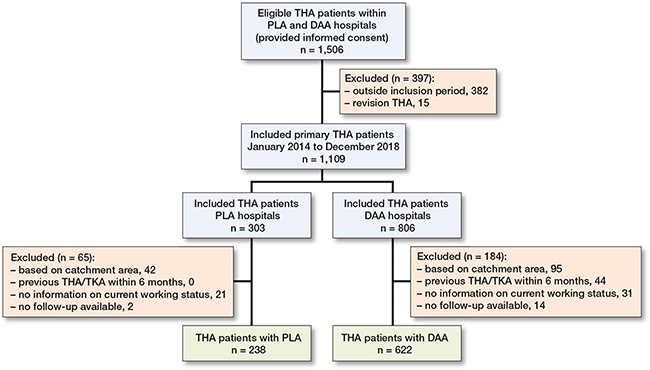
Figure 1. Flowchart of inclusion of participants in the study.THA: total hip arthroplasty; PLA: posterolateral approach; DAA: direct anterior approach.
| Factor | Total population | Not employed a | Employed a | |||
| PLA (n = 238) | DAA (n = 622) | PLA (n = 180) | DAA (n = 459) | PLA (n = 58) | DAA (n = 163) | |
| Female sex | 146 (61) | 386 (62) | 118 (65) | 311 (68) | 28 (48) | 75 (46) |
| Age, mean (SD) | 68 (10) | 68 (10) | 71 (8) | 71 (8) | 56 (8) | 58 (7) |
| BMI, mean (sd) | 28 (4) | 27 (4) | 27 (4) | 27 (4) | 28 (4) | 27 (4) |
| Currently smoking | 29 (12) | 31 (5) | 18 (10) | 20 (4) | 11 (20) | 11 (7) |
| ASA | ||||||
| I | 24 (10) | 117 (19) | 15 (8) | 70 (15) | 9 (16) | 47 (29) |
| II | 169 (71) | 405 (65) | 125 (69) | 307 (70) | 44 (76) | 98 (60) |
| III | 46 (19) | 55 (9) | 41 (23) | 47 (10) | 5 (9) | 8 (5) |
| Comorbidity b | ||||||
| I | 76 (32) | 240 (39) | 56 (31) | 152 (33) | 20 (35) | 88 (54) |
| II | 141 (59) | 313 (50) | 108 (60) | 250 (55) | 33 (57) | 63 (39) |
| III | 22 (9) | 69 (11) | 17 (9) | 57 (12) | 5 (9) | 12 (7) |
| Living alone | 47 (20) | 127 (20) | 41 (23) | 111 (24) | 6 (10) | 16 (10) |
| OHS, mean (SD) | 24 (9) | 24 (8) | 24 (9) | 24 (9) | 24 (7) | 24 (8) |
| SF-12, mean (SD) | ||||||
| MCS | 56 (9) | 57 (7) | 56 (8) | 56 (8) | 53 (10) | 58 (5) |
| PCS | 42 (10) | 43 (10) | 42 (10) | 43 (10) | 33 (10) | 44 (10) |
| HOOS subscales, mean (SD) | ||||||
| Activities in Daily living | 45 (22) | 41 (19) | 44 (22) | 42 (19) | 47 (21) | 40 (18) |
| Sports/Rec. Function | 16 (21) | 20 (20) | 16 (20) | 20 (20) | 14 (21) | 19 (18) |
| HSS-HRES, back to normal | ||||||
| Join recreational activities | 134 (56) | 338 (54) | 95 (53) | 234 (51) | 39 (67) | 104 (65) |
| Social life | 160 (67) | 412 (66) | 118 (65) | 300 (65) | 42 (72) | 112 (69) |
| Ability to do sports | 116 (49) | 293 (47) | 85 (47) | 214 (47) | 31 (5) | 79 (49) |
| Do paid work | 41 (71) | 109 (67) | ||||
| a Employment status (paid work: no = not employed; yes = employed) b Comorbidity: comorbidities based on ASA classification (I: normal health; II: mild systemic disease; III: severe systemic disease). PLA: posterolateral approach; DAA: direct anterior approach; BMI: body mass index; OHS: Oxford Hip Score (0–42); SF-12: Short Form-12 (0–100); MCS: mental component summary; PCS: physical component summary; HOOS: Hip Disability and Osteoarthritis Outcome Score; FU: follow-up; HSS-HRES: New York Hospital for Special Surgery Hip Replacement Expectations Survey. |
||||||
Activity and participation
For all groups, outcomes on ADL, and Sport and Recreation improved postoperatively (Figures 2 and 3, Table 2, see Supplementary data). For instance, ADL scores improved by 40 points (CI 38–42) in the DAA group and 34 points in the PLA group (Table 2, see Supplementary data): Estimate of “3 months FU + Approach*3months FU”: 39.6 + 5.3). Compared with the DAA group, the PLA group only scored clinically worse on ADL at 12 months (12-month FU: –7; CI –12 to –2.4; Table 2, see Supplementary data)). 7.1 represents a clinically relevant difference between the DAA and PLA population, but the 95% confidence interval of this difference is big. No other clinically relevant differences were found in the total population. We found no clinical or statistically significant differences in the not-employed population. The employed PLA group scored clinically worse on both ADL (6-month FU: –10; CI –19 to 0.1, 12-month FU: –9; CI –19 to 0.4), and Sport and Recreation scores (6-month FU: –13; CI –21 to –4.3, 12-month FU: –9; CI –18 to 0.5) at both 6 and 12 months postoperatively, compared with the employed DAA group (Table 2, see Supplementary data)). Similar to the total population, the differences are clinically relevant, but the 95% confidence intervals are big. To provide insight into the individual measurements over time, we included spaghetti plots of the ADL and Sport and Recreation scores (Figures 4 and 5, see Supplementary data).
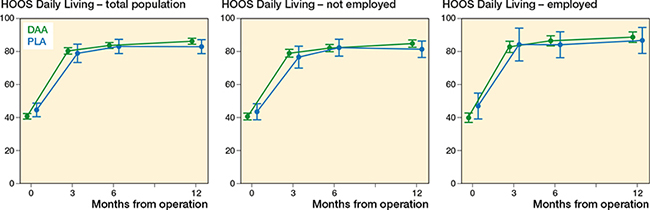
Figure 2. Score over time of the Hip Disability and Osteoarthritis Outcome Score (HOOS) subscale “Activities of daily living.” Based on mixed-effect model analysis. 0: indicating preoperative measurement; 3, 6, 12: measurement months postoperatively.
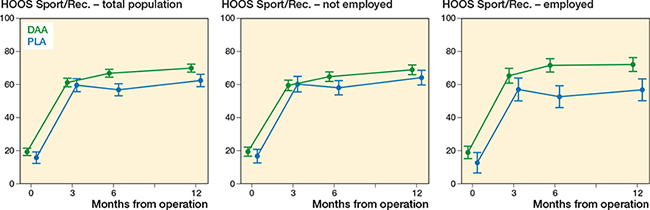
Figure 3. Score over time of the Hip Disability and Osteoarthritis Outcome Score (HOOS) subscale “Sport and recreation function.” Based on mixed-effect model analysis. 0: indicating preoperative measurement; 3, 6, 12: measurement months postoperatively.
Expectations regarding activity and participation
Preoperatively, PLA and DAA groups reported comparable preoperative expectations (Table 1). 6 months postoperatively, the PLA group had lower odds (70%; OR = 0.3; CI 0.2–0.7) to fulfill the expectation on sports performance. At 12 months no difference between the 2 groups was present (Figure 6, Table 3, see Supplementary data). We found no statistically significant differences in fulfillment of joining recreational activities or social life (Figure 6).
In the employed population, the PLA population had lower odds at 6 (80%; OR = 0.2; CI 0.1–0.7) and 12 (30%; OR = 0.7; CI 0.2–2.5) months regarding fulfillment of joining recreational activities (Figure 6, Table 3, see Supplementary data). No statistically significant differences were present in the not-employed population.
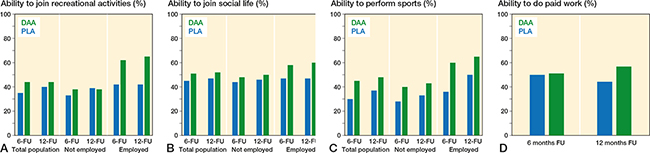
Figure 6. Fulfillment of expectations regarding activities and participation at 6 and 12 months after total hip arthroplasty. A. Fulfillment of the preoperative expectation “Ability to join recreational activities”. B. Fulfillment of the preoperative expectation “Ability to join social life”. C. Fulfillment of the preoperative expectation “Ability to perform sports”. D. Fulfillment of the preoperative expectation “Ability to do paid work” in the employed population. PLA = posterolateral approach; DAA = direct anterior approach; FU = follow-up.
Work participation
Preoperatively, no statistically significant differences for type of work and hours worked were found between the PLA and DAA groups (Table 4, see Supplementary data). Although return to work within the first year postoperative was comparable (PLA 85%; DAA 86%), a larger proportion of DAA patients returned to work earlier (within 3 months: 45% vs. 31%, p = 0.07; Table 5, see Supplementary data). Other postoperative work-related factors were similar (Table 5). Less than half of the employed population fulfilled their expectations on ability to do paid work at 6 (PLA 44%; DAA 45%) and 12 months (PLA 39%; DAA 50%) (Figure 6), but were similar between the groups (Table 3, see Supplementary data).
Discussion
We assessed the association of “activity and participation” as well as expectations regarding the latter between 2 surgical approaches for THA (PLA and DAA) during the first postoperative year. As a secondary goal we evaluated these outcomes in employed and not-employed patients. At 12 months, patients with a DAA approach showed more improvement in ADL compared with the patients with a PLA. Patients with a PLA less often fulfilled their expectations regarding sports performance at 6 months postoperatively, but at 12 months results were comparable. Overall, functional recovery defined by the ICF domain “activity and participation” was comparable between both groups. The employed DAA group scored better on ADL and Sport and Recreation at 6 and 12 months postoperatively, and more often fulfilled their expectations regarding recreational activities at 6 months, and needed less time to return to work.
In line with previous studies, we found only small differences in the total population at 6 and 12 months postoperatively (2,3,16). In the employed subgroup, surgical approach affected recovery of “activity and participation,” as well as fulfillment of expectations. The employed group was younger, healthier (less smoking, fewer comorbidities), and had higher preoperative expectations regarding “activity and participation” than the not-employed group. Previous research showed that younger patients recovered faster with respect to function and pain, allowing a positive effect on participation (17). Additionally, younger and more active patients considering THA view improvement of activity levels, ability to return to work, and social role participation as more important (18,19). Hence, the combination of these differences in preoperative factors, recovery (less muscle damage and improved function after DAA), as well as a more prominent view on return to work and social participation, might explain why we found more favorable results for DAA in the employed group.
Concerning work participation, the average return to work within the first year is in accordance with a systematic review (20). Within the first 3 postoperative months, a larger proportion of employed DAA patients returned to work (45% versus 31%). This might be related to less muscle damage during DAA, resulting in faster gait training and thus earlier functional independence and return to work, but literature is lacking on this assumption. A faster return to work coincides with substantial financial benefits. Additionally, DAA is less expensive per patient than PLA (21). Therefore, there might also be a financial consideration to use DAA, especially with increasing numbers of working-age patients undergoing THA. Nevertheless, the results should be interpreted with caution, as the number of patients included in the employed PLA population is rather small. Therefore, a prospective randomized trial, including both surgical approaches for THA, is needed to validate the findings in this study, whilst also including objectively measured outcomes of functional recovery.
Previous literature also reported short-term favorable outcomes regarding return to sporting activities and functional outcomes for DAA patients (7,22). Although studies with longer follow-up were unable to show superiority for any approach based on patient-reported outcomes, others reported higher risks of femoral failure, complications, and revision surgery after DAA after mid- and long-term follow-up (2,22–24).
The main strength of this study is the large cohort design, assessing “activity and participation” pre- and postoperatively. Additionally, avoiding inclusion based on patients’ preference for a certain surgical approach can be viewed as an instrumental variable, as both hospitals exclusively performed one of the approaches. All arthroplasties were performed using uncemented techniques, therefore the results of this study are not generalizable to the patient population that received cemented THA. We did not include information on implant-related differences. However, implant-related differences will probably not affect short-term outcomes observed in this study. The presence of surgical complications was unavailable for this study, but the literature showed higher complication rates for DAA. Due to the IVA, possible disturbing effects of confounding are less of an issue here. Baseline imbalances in smoking and ASA were accounted for using adjustment in the statistical analyses. In addition, we tried to avoid the occurrence of selection bias (healthier patients choosing a certain approach) by including only patients from the hospital’s own catchment area, thereby ruling out a large part of the preference for a specific surgical approach. Additionally, both hospitals are of similar type (teaching hospitals) in the Netherlands, and both approaches are covered by health insurance. Furthermore, we stratified based on employment, but were unable to distinguish between having a non-paid job/volunteer work and no employment at all. It should be noted that, despite the large cohort, we also performed a large number of statistical tests, which might have resulted in significant differences by random chance.
Conclusion
In this THA population, functional recovery related to “activity and participation” was comparable between the two surgical approaches. However, in the employed patient group, the DAA group had better functional recovery regarding “activity and participation” and had better fulfillment of expectations regarding activities and participation. Additionally, DAA might also facilitate faster return to work.
- Register D A. Annual Report of the Dutch Arthroplasty Register; 2016.
- Jia F, Guo B, Xu F, Hou Y, Tang X, Huang L. A comparison of clinical, radiographic and surgical outcomes of total hip arthroplasty between direct anterior and posterior approaches: a systematic review and meta-analysis. Hip Int 2019; 29: 584-96.
- Peters R M, van Beers L, van Steenbergen L N, Wolkenfelt J, Ettema H B, Ten Have B, et al. similar superior patient-reported outcome measures for anterior and posterolateral approaches after total hip arthroplasty: postoperative patient-reported outcome measure improvement after 3 months in 12,774 primary total hip arthroplasties using the anterior, anterolateral, straight lateral, or posterolateral approach. J Arthroplasty 2018; 33: 1786-93.
- Gignac M A, Backman C L, Davis A M, Lacaille D, Mattison C A, Montie P, et al. Understanding social role participation: what matters to people with arthritis? J Rheumatol 2008; 35: 1655-63.
- Stucki G, Kostanjsek N, Ustün B, Cieza A. ICF-based classification and measurement of functioning. Eur J Phys Rehabil Med 2008; 44: 315-28.
- Amlie E, Havelin L I, Furnes O, Baste V, Nordsletten L, Hovik O, et al. Worse patient-reported outcome after lateral approach than after anterior and posterolateral approach in primary hip arthroplasty: a cross-sectional questionnaire study of 1,476 patients 1–3 years after surgery. Acta Orthop 2014; 85: 463-9.
- Mead P A, Bugbee W D. Direct anterior approach to total hip arthroplasty improves the likelihood of return to previous recreational activities compared with posterior approach. J Am Acad Orthop Surg Glob Res Rev 2022; 6.
- Lee H Y, Jang S-N, Lee S, Cho S-I, Park E-O. The relationship between social participation and self-rated health by sex and age: s cross-sectional survey. Int Nurs Stud 2008; 45: 1042-54.
- Tilbury C, Leichtenberg C S, Kaptein B L, Koster L A, Verdegaal S H M, Onstenk R, et al. Feasibility of collecting multiple patient-reported outcome measures alongside the Dutch Arthroplasty Register. J Patient Exp 2020; 7: 484-92.
- Rathod P A, Orishimo K F, Kremenic I J, Deshmukh A J, Rodriguez J A. Similar improvement in gait parameters following direct anterior & posterior approach total hip arthroplasty. J Arthroplasty 2014; 29: 1261-4.
- Palan J, Manktelow A. Surgical approaches for primary total hip replacement. Orthopaedics and Trauma 2018; 32: 1-12.
- Nilsdotter A K, Lohmander L S, Klässbo M, Roos E M. Hip disability and osteoarthritis outcome score (HOOS): validity and responsiveness in total hip replacement. BMC Musculoskelet Disord 2003; 4: 10.
- Dreinhöfer K, Stucki G, Ewert T, Huber E, Ebenbichler G, Gutenbrunner C, et al. ICF core sets for osteoarthritis. J Rehabil Med 2004; 10.1080/16501960410015498: 75-80.
- van den Akker-Scheek I, van Raay J J, Reininga I H, Bulstra S K, Zijlstra W, Stevens M. Reliability and concurrent validity of the Dutch hip and knee replacement expectations surveys. BMC Musculoskelet Disorde 2010; 11: 242.
- Greenland S. An introduction to instrumental variables for epidemiologists. Int J Epidemiol 2000; 29: 722-9.
- Fagotti L, Falotico G G, Maranho D A, Ayeni O R, Ejnisman B, Cohen M, et al. Posterior versus anterior approach to total hip arthroplasty: a systematic review and meta-analysis of randomized controlled trials. Acta Ortop Bras 2021; 29: 297-303.
- Dolata J, Pietrzak K, Manikowski W, Kaczmarczyk J, Gajewska E, Kaczmarek W. Influence of age on the outcome of rehabilitation after total hip replacement. Pol Orthop Traumatol 2013; 78: 109-13.
- Gignac M A, Backman C L, Davis A M, Lacaille D, Cao X, Badley E M. Social role participation and the life course in healthy adults and individuals with osteoarthritis: are we overlooking the impact on the middle-aged? Soc Sci Med 2013; 81: 87-93.
- Takeuchi K, Hashimoto S, Matsumoto T, Hayashi S, Takayama K, Kuroda R. Recovery of activity level following total hip arthroplasty in patients less than 60 years of age. Hip Int 2021; 31(5): 632-6.
- Hoorntje A, Janssen K Y, Bolder S B T, Koenraadt K L M, Daams J G, Blankevoort L, et al. The effect of total hip arthroplasty on sports and work participation: a systematic review and meta-analysis. Sports Med 2018; 48: 1695-726.
- Joseph N M, Roberts J, Mulligan M T. Financial impact of total hip arthroplasty: a comparison of anterior versus posterior surgical approaches. Arthroplast Today 2017; 3: 39-43.
- Zijlstra W P, De Hartog B, Van Steenbergen L N, Scheurs B W, Nelissen R. Effect of femoral head size and surgical approach on risk of revision for dislocation after total hip arthroplasty. Acta Orthop 2017; 88: 395-401.
- Hoskins W, Bingham R, Lorimer M, Hatton A, de Steiger R N. Early rate of revision of total hip arthroplasty related to surgical approach: an analysis of 122,345 primary total hip arthroplasties. J Bone Joint Surg Am 2020; 10.2106/jbjs.19.01289.
- Sun X, Zhao X, Zhou L, Su Z. Direct anterior approach versus posterolateral approach in total hip arthroplasty: a meta-analysis of results on early post-operative period. J Orthop Surg Res 2021; 16: 69.
Supplementary data
| Factor | Total population Adjusted Model 1 a Estimates (95% CI) | Not employed population Adjusted Model 2 a Estimates (95% CI) | Employed population Adjusted Model 3 a Estimates (95% CI) |
| Activities in daily living | |||
| Approach at baseline b | 3.9 (–0.6 to 8.4) | 2.9 (–2.4 to 8.2) | 7.1 (–1.2 to 15.5) |
| 3-month FU c | 40 (38 to 42) | 38 (36 to 41) | 43 (39 to 47) |
| Approach * 3-month FU d | –5.3 (–11 to 0.7) | –5.2 (–12 to 1.8) | –5.7 (–17.0 to 5.7) |
| 6-month FU c | 43 (41 to 45) | 42 (40 to 44) | 47 (43 to 50) |
| Approach * 6-month FU d | –4.4 (–9.2 to 0.4) | –2.6 (–8.2 to 2.9) | –9.5 (–19 to 0.1) |
| 12-month FU c | 46 (44 to 47) | 44 (42 to 46) | 49 (45 to 52) |
| Approach * 12-month FU d | –7.1 (–12 to –2.4) | –6.3 (–12 to –0.9) | –9.1 (–19 to 0.4) |
| Sport and recreation function | |||
| Approach at baseline b | –3.5 (–7.7 to 0.6) | –2.8 (–7.7 to 2.2) | –6.3 (–14 to 1.1) |
| 3-month FU c | 42 (39 to 45) | 40 (38 to 43) | 47 (42 to 52) |
| Approach * 3-month FU d | 1.9 (–3.1 to 7.0) | 3.5 (–2.6 to 9.5) | –2.1 (–11 to 6.9) |
| 6-month FU c | 48 (45 to 50) | 45 (42 to 49) | 53 (49 to 58) |
| Approach * 6-month FU d f | –6.5 (–11 to –1.8) | –4.0 (–9.6 to 1.6) | –13 (–21 to –4.3) |
| 12-month FU c | 51 (48 to 53) | 50 (46 to 53) | 54 (49 to 58) |
| Approach * 12-month FU d | –4.0 (–8.7 to 0.8) | –2.0 (–7.7 to 3.7) | –9.1 (–18 to –0.5) |
| a Adjusted for American Society of Anesthesiologists’ physical status classification and smoking status. Approach coded as: 0 = direct anterior approach (DAA) vs 1 = posterolateral approach (PLA). 95% CI = 95% confidence intervals; FU = follow-up. b Approach at baseline = difference in HOOS subscale score between PLA and DAA at baseline (preoperative). c # month FU” = change in HOOS subscale between baseline score and score at # months of follow-up. d Approach * #-month FU = interaction term between approach and follow-up measurement; difference in HOOS subscale score between PLA and DAA at # month of follow-up. |
|||
| Factor | Total population Adjusted Model 1 a Odds ratios (95% CI) | Not employed population Adjusted Model 2 a Odds ratios (95% CI) | Employed population Adjusted Model 3 a Odds ratios (95% CI) |
| Join recreational activities | |||
| Approach at 6-month FU b | 0.6 (0.3 to 1.2) | 0.9 (0.4 to 2.0) | 0.2 (0.1 to 0.7) |
| 12-month FU c | 1.3 (0.9 to 1.8) | 1.2 (0.8 to 1.9) | 1.5 (0.7 to 3.2) |
| Approach*12-month FU d | 1.1 (0.5 to 2.2) | 1.3 (0.6 to 3.0) | 0.7 (0.2 to 2.5) |
| Ability to join social activities | |||
| Approach at 6-month FU b | 0.8 (0.4 to 1.5) | 1.0 (0.4 to 2.4) | 0.3 (0.1 to 1.2) |
| 12-month FU c | 1.3 (0.9 to 2.0) | 1.2 (0.8 to 2.0) | 1.7 (0.8 to 3.9) |
| Approach*12-month FU d | 0.7 (0.4 to 1.5) | 0.8 (0.3 to 1.9) | 0.5 (0.1 to 2.2) |
| Ability to perform sports | |||
| Approach at 6-months FU b | 0.3 (0.2 to 0.7) | 0.5 (0.2 to 1.2) | 0.1 (0.0 to 0.5) |
| 12-month FU c | 1.4 (0.9 to 2.1) | 1.4 (0.9 to 2.3) | 1.5 (0.6 to 3.7) |
| Approach*12-month FU d | 1.1 (0.5 to 2.3) | 0.9 (0.4 to 2.2) | 1.6 (0.3 to 7.4) |
| Ability to return to work | |||
| Approach at 6-month FU b | 0.6 (0.1 to 2.8) | ||
| 12-month FU c | 1.9 (0.9 to 4.3) | ||
| Approach*12-month FU d | 0.3 (0.1 to 1.5) | ||
| a and abbreviations, see Table 2 b Approach at 6-month FU”= difference in odds of fulfillment of expectations between PLA and DAA at 6 months postoperatively. c 12-month FU = change in odds of fulfillment of expectations between 6-month score and score at 12 months of follow-up. d Approach*12-month FU = interaction term between approach and follow-up measurement; difference in odds of fulfillment of expectations between PLA and DAA at 12 months of follow-up. |
|||
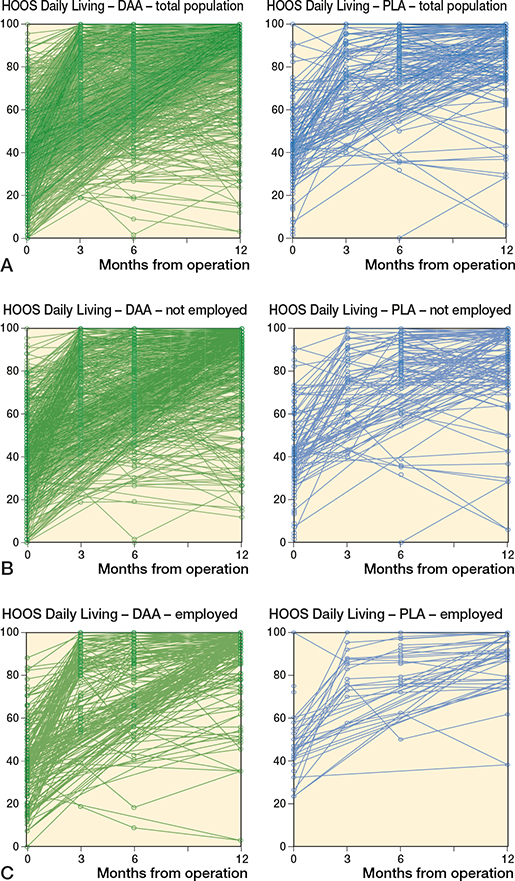
Figure 4. A. HOOS daily living scores in the total population (A), in the not-employed population (B), and in the employed population (C).
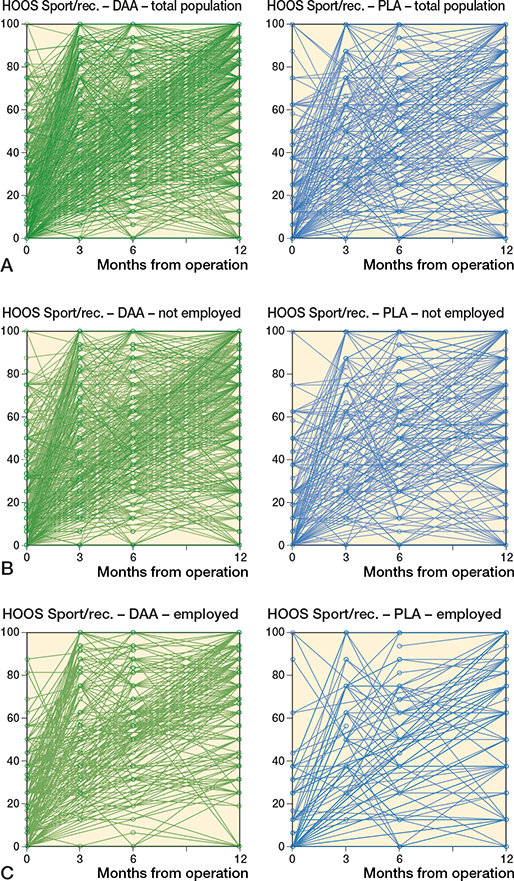
Figure 5. HOOS sport and recreation scores in the total population (A), in the not-employed population (B), and in the employed population (C).
| Factor | PLA (n = 58) | DAA (n = 166) |
| Working hours, mean (SD) | 32 (12) | 31 (12) |
| Physical workload | ||
| Light | 27 (47) | 64 (40) |
| Medium | 17 (30) | 66 (41) |
| Heavy | 13 (23) | 31 (19) |
| Work status | ||
| Employed | 53 (91) | 134 (82) |
| Self-employed | 5 (9) | 29 (18) |
| On sick leave due to hip complaints | 14 (25) | 40 (24) |
| Limited at work due to hip complaints | 52 (95) | 130 (88) |
| SF-12: | ||
| During the past 4 weeks, have you had any of the following problems with your work or other regular daily activities as a result of your physical health? | ||
| Accomplished less than you would like | 42 (74) | 133 (81) |
| Limited in kind of work or other activities | 41 (71) | 129 (78) |
| During the past 4 weeks, how much did pain interfere with your normal work (including work outside the home and housework)? | ||
| Not at all/a little bit | 38 (64) | 79 (48) |
| Moderately | 6 (10) | 47 (29) |
| Quite a bit/extremely | 15 (26) | 39(24) |
| Expected working hours 12 months post-operatively, mean (SD) | 32 (14) | 31 (13) |
| Compared with current situation | ||
| More hours | 6 (12) | 2 (15) |
| Less hours | 2 (4) | 4 (3) |
| Equal hours | 43 (84) | 126 (83) |
| Expected return to work (weeks), mean (SD) | 8 (5) | 8 (5) |
| For abbreviations, see Table 1. | ||
| Factor | PLA (n = 58) | DAA (n = 163) | p-value a |
| Return to work | |||
| 3-month FU | 18 (31) | 74 (45) | 0.1 |
| 6-month FU | 41 (71) | 128 (79) | 0.3 |
| 12-month FU | 50 (86) | 141 (87) | 0.8 |
| Working hours at FU, mean (SD) | |||
| 3-month FU | 14 (11) | 16 (10) | 0.6 |
| 6-month FU | 16 (11) | 16 (11) | 0.9 |
| 12-month FU | 30 (15) | 30 (14) | 0.9 |
| Limited at work due to complaint | |||
| 3-month FU (n = 18 and 74) | 11 (61) | 38 (51) | 0.3 |
| Missing | – | – | |
| 6-month FU (n = 41 and 128) | 18 (44) | 50 (39) | 0.7 |
| Missing | – | 2 (2) | |
| 12-month FU (n = 50 and 141) | 12 (24) | 28 (20) | 0.8 |
| Missing | 11 (22) | 41 (29) | |
| SF-12: | |||
| During the past 4 weeks, have you had any of the following problems with your work or other regular daily activities as a result of your physical health? | |||
| Accomplished less than you would like | |||
| 3-month FU (n = 18 and 74) | 6 (33) | 18 (24) | 0.5 |
| Missing | – | 1 (1) | |
| 6 month FU (n = 41 and 128) | 12 (29) | 29 (23) | 0.5 |
| Missing | – | 1 (1) | |
| 12 month FU (n = 50 and 141) | 6 (12) | 33 (23) | 0.04 |
| Missing | |||
| Limited in kind of work or other activities | |||
| 3-month FU (n = 18 and 74) | 8 (44) | 26 (35) | 0.5 |
| Missing | – | 1 (1) | |
| 6 month FU (n = 41 and 128) | 11 (27) | 27 (21) | 0.6 |
| Missing | – | 2 (2) | |
| 12 month FU (n = 50 and 141) | 11 (22) | 31 (22) | 0.9 |
| Missing | 1 (2) | 2 (1) | |
| During the past 4 weeks, how much did pain interfere with your normal work (including work outside the home and housework)? | |||
| 3-month FU (n = 18 and 74) | 0.7 | ||
| Not at all/a little bit | – | 2 (1) | |
| Moderately | 2 (11) | 6 (8) | |
| Quite a bit/extremely | 15 (83) | 63 (85) | |
| Missing | 1 (6) | 3 (4) | |
| 6-month FU (n = 41 and 128) | 0.7 | ||
| Not at all/a little bit | 2 (5) | 3 (2) | |
| Moderately | 4 (10) | 11 (9) | |
| Quite a bit/extremely | 35 (85) | 105 (82) | |
| Missing | – | 9 (7) | |
| 12-month FU (n = 50 and 141) | 0.6 | ||
| Not at all/A little bit | 33 (66) | 87 (62) | |
| Moderately | 1 (2) | 20 (14) | |
| Quite a bit/extremely | 1 (2) | 5 (4) | |
| Missing | 15 (30) | 29 (21) | |
| a Comparison of PLA and DAA patients by means of independent sample t-test for continuous variables; chi-square test or Fisher’s exact test for categorical variables. For abbreviations, see Table 1. |
|||